
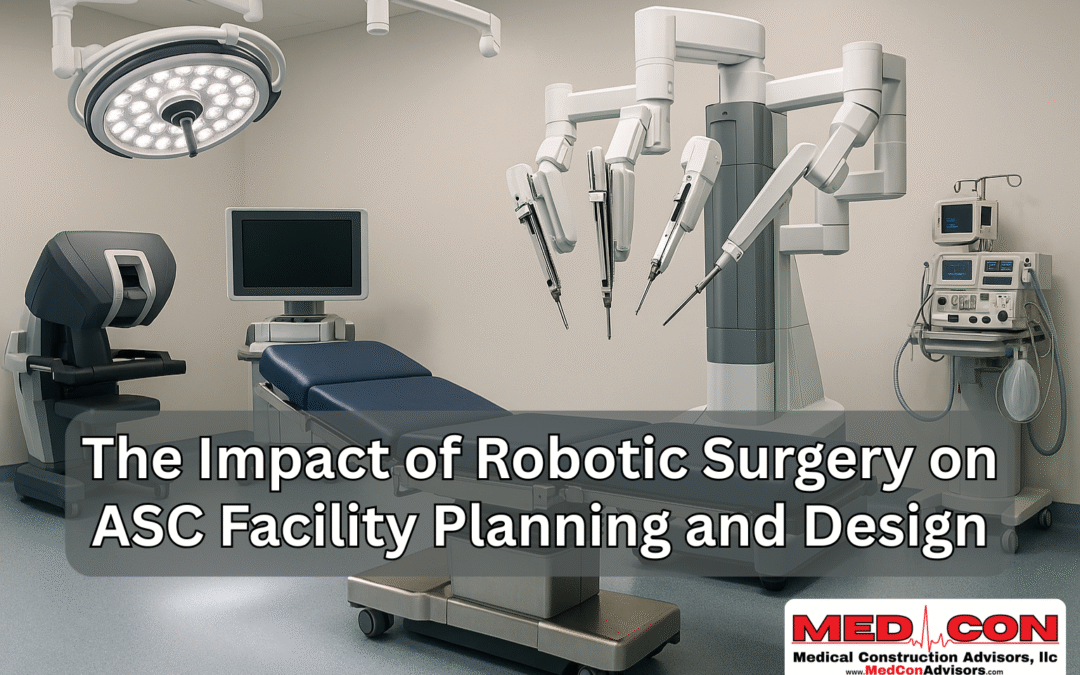
The Impact of Robotic Surgery on ASC Facility Planning and Design
As robotic surgery technologies continue to transform the healthcare landscape, more Ambulatory Surgery Centers (ASCs) are integrating these advanced systems into their facilities. For mid-career surgeons considering this shift, the decision to adopt robotic surgery isn’t just about staying ahead of technological trends; it’s also about optimizing patient care, improving surgical precision, and, perhaps most importantly, enhancing operational efficiency. However, incorporating robotic systems into an ASC comes with specific design and facility planning challenges that can impact both the operating room (OR) layout and the overall cost-effectiveness of your center.
This article explores the key ways in which robotic surgery influences ASC facility planning, the cost-benefit trade-offs of robotic systems, and how surgeons can balance time savings against the high initial investment.
Understanding Robotic Surgery: Efficiency Meets Precision
Robotic surgery allows surgeons to perform complex procedures with enhanced precision, minimal invasiveness, and better visualization. Systems like the da Vinci Surgical System have been widely adopted for urology, gynecology, and orthopedic surgeries, among others. These systems help surgeons execute highly precise movements, which not only reduce patient recovery times but also improve overall outcomes.
For ASCs, the decision to integrate robotic surgery technology is typically driven by its ability to reduce procedure time and improve patient throughput. However, as with any major investment, the financial considerations are complex. The high cost of robotic systems, which can range from $1 million to $2.5 million, must be weighed against the significant time savings, operational efficiency, and potentially higher patient volume that these systems bring.
Impact on Operating Room Design: Space and Workflow Considerations
Integrating robotic surgery systems into an ASC requires more than just purchasing the equipment—it requires a strategic redesign of the operating rooms. Robotic systems, with their multiple components and specialized tools, necessitate careful planning to ensure they are efficiently incorporated into the space without disrupting workflow.
1. Increased Space Requirements
Robotic systems require considerably more space than traditional surgical tools. The system consists of the console, the robotic arms, and various surgical instruments that need to be strategically positioned around the patient and surgical team. For example, in a traditional OR, there may be a limited amount of space for the surgical team and equipment. With robotic surgery, however, the room must accommodate both the robot and the surgical staff in a way that ensures seamless movement and quick access to all components.
This means that ASCs must allocate more square footage to accommodate the robotic system. For instance, operating rooms designed for traditional surgeries typically range between 400–600 square feet, but for robotic surgeries, the required space may increase by 15–30% to fit the equipment and provide the necessary space for surgical assistants and other support staff. This increased space requirement is an essential consideration for any ASC contemplating the integration of robotic surgery.
2. Workflow Optimization and Staff Coordination
Robotic surgery systems require careful attention to workflow, both for the surgical team and for the smooth movement of the robot itself. In an ASC that incorporates robotic surgery, the layout of the operating room and adjacent spaces must facilitate seamless transitions between the different phases of surgery.
Robotic systems often require multiple team members to operate effectively, including the surgeon at the console, a surgical assistant managing the robotic arms, and an anesthesia team. Your Design Team needs to design the space in a way that allows these teams to move fluidly without crowding, minimizing the risk of delay or miscommunication.
Incorporating workflow optimization into the OR layout is crucial for efficiency. With robotic surgery, the surgeon needs to be at the console, while other staff members might need to adjust the robot or assist with instruments. The design should ensure that staff members can assist quickly, without unnecessary movement or time wasted.
Support Spaces: Sterile Processing and Storage Needs
Robotic surgery also requires specialized equipment, such as robotic arms and instruments that must be sterilized after each use. This means the ASC needs to have a sterile processing area that is equipped to handle the additional needs of robotic equipment.
1. Specialized Storage Solutions
Robotic surgical tools are often larger and more intricate than traditional instruments, which means ASCs need to invest in specialized storage solutions. These tools must be organized and easily accessible to reduce setup time between cases, especially as robotic systems require a higher level of precision and instrument preparation.
Additionally, ASCs must plan for maintenance and repair storage for robotic systems, as these machines may require regular servicing. This means investing in storage spaces that can accommodate the sophisticated equipment and keeping track of maintenance schedules to ensure systems are always operational.
2. Sterile Processing and Cleaning Facilities
Because robotic systems involve complex instruments that must be cleaned and sterilized between uses, the ASC needs to ensure that the sterile processing department (SPD) is equipped to handle these specific needs. Instruments used in robotic surgery are often much larger and more complex than those used in traditional surgeries, and cleaning these components requires specialized equipment and procedures.
ASCs should also design their SPD with sufficient space for the disinfection and sterilization of robotic tools, considering the increased volume and specialized nature of these instruments. Proper sterilization is critical to patient safety, and a well-designed SPD will help prevent delays caused by cleaning and disinfection procedures.
Cost vs. Time Savings: Evaluating the ROI
For mid-career surgeons, one of the most significant concerns when adopting robotic surgery is balancing the high initial cost of the equipment with the time savings it brings. While robotic systems are expensive, they can save significant time during surgery by allowing for faster procedures and reducing the likelihood of complications, which in turn leads to shorter recovery times for patients.
1. Time Savings and Operational Efficiency
Robotic surgery can reduce surgical times by offering greater precision, especially in complex procedures. This means surgeons can perform more surgeries in the same amount of time, ultimately improving the case throughput for the ASC. Additionally, reduced complication rates and faster recovery times can mean fewer post-operative visits, further increasing the efficiency of the surgery center.
2. Return on Investment (ROI)
The key to evaluating the ROI for robotic surgery is understanding how the technology will impact the center’s overall efficiency and revenue. While the initial capital investment is substantial, the increased surgical capacity and the potential for attracting more patients can provide significant financial returns. Additionally, offering cutting-edge robotic surgery can differentiate the ASC from competitors, allowing the facility to market itself as a high-tech, high-quality provider.
Conclusion: Robotic Surgery as the Future of ASCs
The integration of robotic surgery into ASCs is not just a trend—it’s a future-proof investment. Although the upfront costs may be high, the operational efficiency, time savings, and potential to attract more patients make robotic surgery a worthwhile consideration for ASCs. Properly designing the operating rooms and support spaces to accommodate robotic systems will ensure that the transition is smooth and that the technology is utilized to its full potential.
At Medical Construction Advisors, we specialize in guiding ASCs through the complexities of facility planning and design. If you’re considering integrating robotic surgery into your ASC, we can help you design a space that maximizes efficiency, minimizes downtime, and enhances patient care.
Medical Construction Advisors is a premier consulting firm with a proven track record in developing Ambulatory Surgery Centers (ASCs), Medical Office Buildings (MOBs), and Clinics. With over 100 successful hands-on projects, we bring unparalleled expertise in both ground-up constructions and tenant improvements. Our mission is to deliver exceptional value and quality, ensuring that our clients achieve their goals with precision and efficiency.
For more information, reach us at: hello@MedConAdvisors.com or Call us at 952-262-0739